

Misunderstood
All my life, people have looked at my body and decided they know my story.
They know I'm lazy. They know I eat too much. They know I don't exercise enough. They know I lack discipline, willpower, self-respect.
They know all of this without asking a single question.
The truth? I've exercised daily for years - sometimes more than two hours a day. I've been on keto for years, managing my eating so carefully that I've reversed prediabetes. I've survived childhood trauma that would make most people crumble. I've done everything "right" while my body has been falling apart in ways no one bothered to diagnose.
But people don't see that. They see lipedema - a genetic fat disorder - and they see moral failure.

A beautiful woman walking down the street. (Runway AI)
I've had strangers yell "Here comes the bus!" at me while I'm walking down the street, minding my own business. When people get angry at me, the first insult out of their mouths usually starts with "fat."
Even doctors look at me and assume I have diabetes. The reality? My autonomic nervous system dysfunction causes reactive hypoglycemia and nocturnal hypoglycemia - my blood sugar drops dangerously low, which is serious and potentially deadly. The opposite of diabetes.
But they don't ask. They just see my body and fill in the blanks.
What I Don't Talk About
These days, I've mostly stopped talking.
I don't like to eat in front of people outside my household. I don't talk about my health, even though I desperately need supportive community. I don't warn people that I could fall at any moment - I just sit down. I don't mention that I drink electrolytes constantly, because people will tell me that "fat people like me shouldn't eat so much salt."
I don't talk about how terrifying past falls have been. How one fall turned into convulsive movements that looked like a seizure - my body shaking, unable to get up for a full minute while change spilled from my hand. I don't talk about the black eye. The injured shoulders, hip, ankles. The boot and crutches.
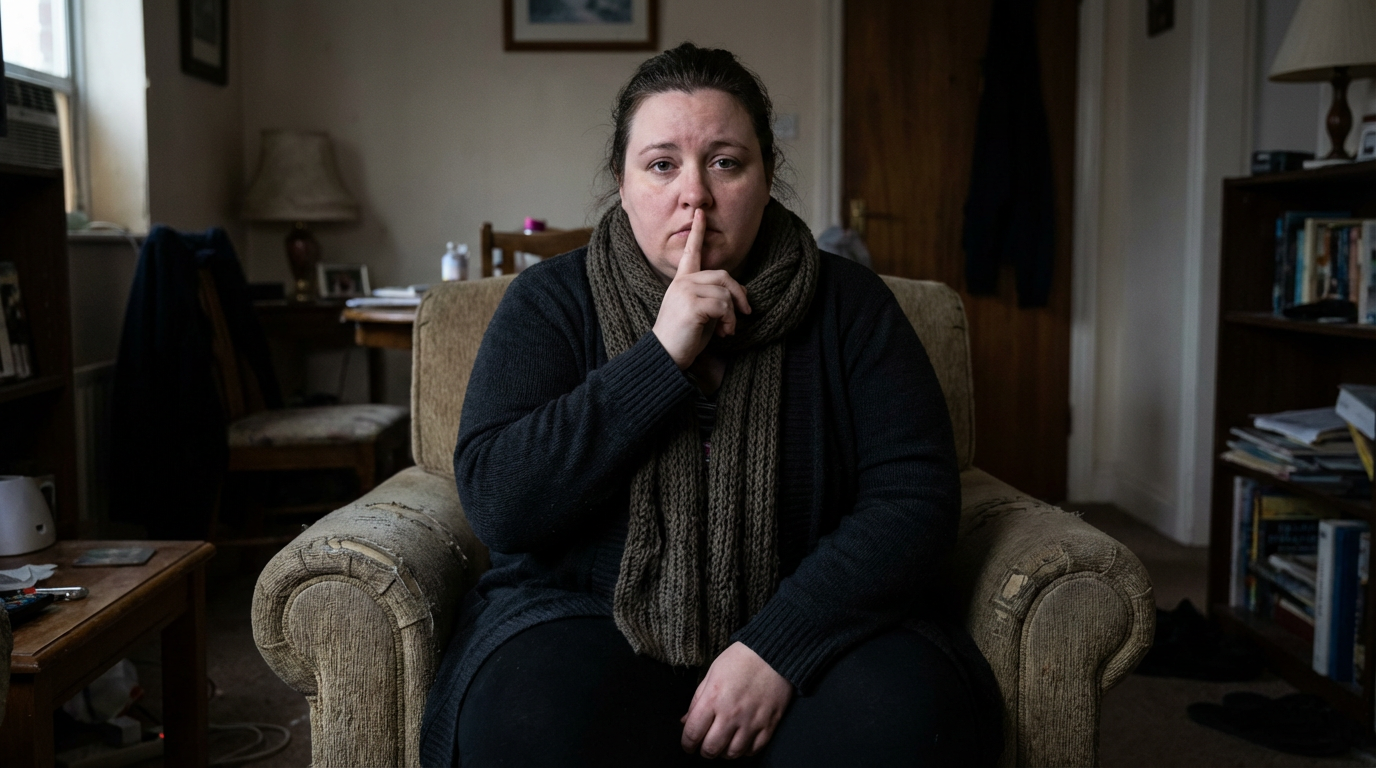
A sad, isolated woman shushes the camera. (Runway AI)
I don't talk about pain.
I just ... stopped talking.
I expect to be misunderstood now, because for modern humans, being fat is apparently the worst thing they can imagine.
Well, I'm here to tell you: being judgmental and mean are a lot worse than being fat.
The Invisible Illnesses
My conditions are essentially invisible - except for lipedema. And that one visible condition earns me vitriol I never asked for.
Hypermobile Ehlers-Danlos Syndrome (hEDS)? Invisible until a joint dislocates.
POTS (Postural Orthostatic Tachycardia Syndrome)? Invisible until I'm on the floor.
Mast Cell Activation Syndrome (MCAS)? Invisible until my throat starts closing.
Lymphedema? People just see "fat legs."
Stage 3 lipedema? People see obesity and make assumptions about my character, my habits, my worth.
They don't see decades of dismissed symptoms. They don't see the falls, the syncope episodes, the chronic pain, the joints that pop out of place. They don't see the medical records full of "lose weight" instead of diagnoses.
They don't see the years I spent starving myself, exercising obsessively, doing everything I was told - while my body kept failing in ways no one would investigate.
They just see fat. And they decide they know everything.
The Cost of Silence
I've learned to protect myself by becoming smaller - not physically (that's not how my genetic conditions work), but socially. By sharing less. By expecting nothing. By sitting down before anyone notices I'm about to fall. By managing my collapsing blood sugar alone. By carrying the weight of invisible illness in a body that people think tells them everything they need to know.
The silence is protective. It's also isolating.
But here's the thing: I'm done protecting other people from the truth about what judgment costs. What it cost me to be dismissed for decades. What it costs to navigate a world that sees my body as evidence of moral failure rather than as evidence of genetic conditions that have nothing to do with calories or character.
I'm a zebra - medical slang for someone with a rare disease. The saying goes: "When you hear hoofbeats, think horses, not zebras."
But what if you're actually a zebra? What if the hoofbeats everyone keeps dismissing as horses are actually you, trying to be seen for what you really are?
I'm done being mistaken for a horse.
